

If you live in a low-lying coastal area of the NT, you may be at risk from storm surge during a tropical cyclone.
Check whether your home is in a storm surge area and be prepared to evacuate if authorities tell you to leave.
Storm surge is a rise in sea level caused by the strong winds and low air pressure of a tropical cyclone. It can reach the coast before the cyclone crosses, and large waves can make flooding and damage worse.
Storm surge is particularly dangerous when it coincides with high tide. The combination of storm surge and the normal tide is called a storm tide.
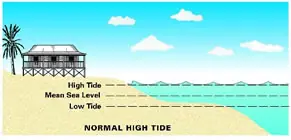
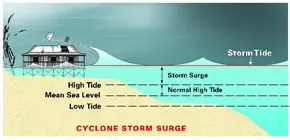
Images courtesy of the Bureau of Meteorology.
Prepare for storm surge
If you live in a low-lying coastal area:
- check the storm surge inundation maps to understand the risk to your property
- plan where you will go and how you will get to higher ground if you need to evacuate
- prepare an emergency kit and keep it easy to access
- if you have your own transport, keep it fuelled and ready
- monitor official warnings and follow instructions from police and emergency services.
If authorities tell you to evacuate:
- leave when instructed and move to a safe place on higher ground
- take your emergency kit
- go to your planned safe location, such as a friend or relative's home or an emergency shelter
- follow instructions from police and emergency services.
Water and sewerage
Heavy rain and flooding can affect water and sewerage services.
For information about water and sewerage safety during emergencies, go to the Power and Water website.